19/12/20 – Discrimination?
CN: suicide mention, brief mention of homophobia, transphobia and ableism
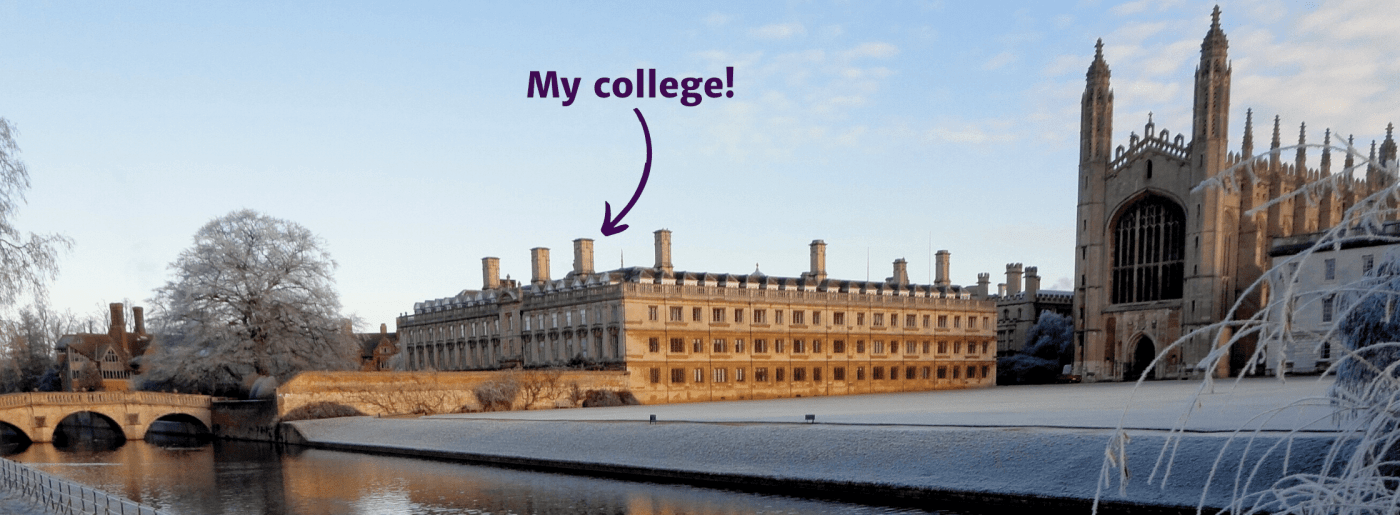
“The friendly college” is one of the first descriptors I heard about Clare. It was the Cambridge open day, and the brightness of the day seemed to amplify the warmth in the smile of the student showing me around. Following her bright yellow t-shirt across the bridge from Old Court, while also glancing at the river Cam that was glistening in the sun and walking along The Avenue lined by an array of different coloured flowers, was idyllic. It immediately felt like a place I would be happy to call home for the next few years of my life. Unfortunately, it barely took a term at the college to realise that Clare was not as ideal as I thought.
Now in my second year at the college, I have heard countless stories of ableism, homophobia, transphobia, and more. A college that would rather students climb on the roof than publicly fly a flag, that would rather keep a ‘problematic’ porter than care for the students who will no longer get help from porters in an emergency, that would rather endorse systems that only seek to harm those who are vulnerable, is a college that doesn’t care about its students, their mental health or their safety. Each of these topics deserve, and need to be talked about, but for now I’m going to tell you about how my college might be the first institution in history to refuse to accept the result of OIA complaint, the body mandated by law to review student complaints, and why I believe the college doesn’t care about me – a Black, LGBT+ student with long-term mental health issues – or any of the students it claims to.
My first term was difficult, but I went home feeling proud that I’d made it through my first term and succeeded. However, it was hard coming back from the difficult holiday period to mocks and a new supervisor whose most noticeable skill was repeatedly dissecting every single mistake I made as if he were trying to replicate the intrusive thoughts that I already live with. In the 2nd meeting my new supervisor we went over mocks. His method of critiquing each and every mistake repeatedly, left me in tears. Not only did I have my own disappointment to contest with, but I had his harsh critiques echoing around my head too. I got to my room, curled up in a ball and cried. I was crushed. Eventually the critiques started to amplify my own insecurities and my thoughts become increasingly sinister.
Despite rarely doing so, I reached out for help. I spoke to the college’s Mental Health Advisor, also a part-time NHS nurse, but this only left me feeling worse. At the end of our shambolic meeting, she urged me to collect the 4 months worth of medication, insteady of 4 weeks, that my GP had accidently overprescribed. Logically, as someone who has had multiple suicide attempts, I declined over concerns for my own safety and over the next few days, despite the advisor’s inability to help, I started to feel better.
A few days later, so not even immediately, the advisor told my college nurse that I was “impossible” to have in college. She instructed the college nurse to break confidentiality, despite presumably not thinking I was in danger. My college nurse was told to call my parents, tell them to come up to Cambridge, and, most shockingly, to wait for them to arrive before contacting me- ultimately this meant that the college waited almost 3 hours before checking that I was alive. When they arrived, we sat down with my college nurse, and senior tutor, and I was told I was going to intermit. I was told would be leaving right there and then, without even saying bye to my friends. I was given no time to think about it because it was not my decision, they had already made it for me.
As much as the college wanted to take away my autonomy, I went back to my senior tutor who, after discussion, eventually decided that I would be suspended immediately pending a Stage 3 Fitness to Study Panel. Upon leaving, the college informed me that the advisor was going to contact my local crisis team to ensure I had support while I was suspended. I now know that this never happened. The college, that was apparently so concerned with my wellbeing, had sent me home with no support.
The Fitness to Study panel consisted of five, all white and mostly male, fellows who I had mostly never even seen before. They interrogated me about every aspect of my time at the college so far and, despite none of them being medical professionals, asked intrusive questions about my mental health. Since no-one on the panel was medical professional, none of them could actually make any decision on whether I was “fit to study” and frankly, I didn’t have a chance of that panel ruling in my favour. The only thing left in college was to appeal to the Master.
Appealing to a Lord is far too intimidating to be a step in a process that is meant to be concerned with the welfare of students but, despite this, I appealed.
“Fit to study” is a painfully vague, and non-medical, term that my psychiatrist could not comment on without a clear definition from the college, which the college refused to provide. Despite not being able to get the exact wording, I provided evidence that my psychiatrist and my care coordinator were both happy to continue to support me in college. I explained that my short-lived spiral was mostly due to the supervision which was completely incompatible with the guidelines on my Student Support Document, and I explained that the advisor using terms like “impossible” was laced with mental health stigma. The college already knew my supervision reports were all firsts and 2.i, as were 3 out of 4 of my mock results. As well as this, I was also the welfare officer for the LGBT+ Campaign, had just been accepted as a Young Minds Activist, and had started learning a language. I evidently knew when to reach out for support and I had made lovely friends. I would argue that, despite the fact I have a disability (namely long-term mental health issues) and a particularly bad week, I was thriving.
In the end, my appeal was refused on the basis that my evidence did not explicitly say I was “fit to study”. I was told that I was to no longer contact the college on this matter. In fact, when I later raised that the Mental Health Advisor’s registration as a nurse and their registration as a healthcare providing company was either hidden or non-existent, I was told my criticism was unfounded. By this time, the college’s claim that this was all done with my “well-being wholly in mind” seemed increasingly false.
In March, I submitted my case to the Office of Independent Adjudicators (OIA). The OIA is an independent body, that higher education institutions sign-up to, that is designated by the Higher Education Act 2004 to review student complaints. In August, I was told that my complaint was justified but soon after I was also told that my college wanted the outcome reviewed again. In September, I was told that my complaint was still justified, and the case was closed but a month later, I received a letter from the college stating that they disagreed and they wouldn’t be following the final recommendation – compensation for distress. The following month I was informed that the college had spoken with the OIA and they’d been given the choice to comply with recommendation or have a judicial review and, from what I’ve heard recently, the college has decided against the former.
My college has seemingly decided to extend this already 10-month process over an amount that their QC of a Master has been reported to have made in an hour. Surely they can see that their actions have had, and will continue to have, an adverse effect on me. Despite their claims that I lacked resilience, I studied, completed my summer exams, was completely discharged from mental health services, and made it to second year but there is only so much of this I can handle. They don’t understand how demoralising and dehumanising it is to see that they could not care less about you. They don’t understand how upsetting it is to have aspects of you repeatedly scrutinised and attacked. I am just so tired.
Clare could be the first institution, in the 15 years the OIA has handled student complaints, to intentionally not comply with an OIA recommendation. As much as my college tutor tries to reassure me that the college’s attitude to my case has nothing to do with me, that is extremely hard to believe. I don’t know what it is about me that makes the members of this 700-year-old college so happy to walk over me like I’m nothing, but I know the answer to that question will fare a lot worse for them than it will me.
 Black Mental Me
That happens in Canada and the US today, particularly if it involves students who are suicidal. It’s stigma, pure and simple.
LikeLike